Solar panels are often viewed as solid, singular units, but under the glass lies a complex “circulatory system” of conductive materials. To turn sunlight into usable electricity, individual solar cells must be linked together with extreme precision. This is where PV Ribbon and Interconnect Wire come into play.
What is PV Ribbon?
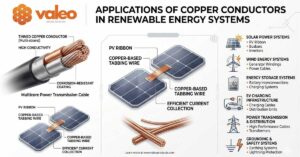
PV Ribbon (Photovoltaic Ribbon) is a specialized copper conductor used to connect solar cells in a module. It is a thin, flat ribbon made of high-purity oxygen-free copper, coated with a layer of solder usually a tin-lead or lead-free alloy.
There are two primary types used in a panel:
- Busbar Ribbon (Interconnect Wire): These run across the surface of the solar cell, collecting current from the “fingers” the tiny lines printed on the cell.
- Stringing Ribbon: This connects the busbars of one cell to the busbars of the next, linking them in a “string” to build voltage.
The Connection Process: How it Works
The process of connecting cells is known as Stringing and Tabbing. Here is the step-by-step breakdown:
1. Tabbing the Cells
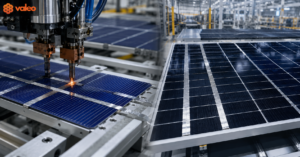
The PV ribbon is placed over the busbars of a solar cell. Using controlled heat (via IR lamps, soldering irons, or lasers), the solder coating on the ribbon melts and bonds with the silver paste of the busbar. This creates a low-resistance electrical path.
2. Stringing (Cell-to-Cell)
To create a panel, cells are connected in series. The ribbon is soldered to the top (front) of one cell and then looped over to be soldered to the bottom (back) of the adjacent cell. This “daisy chain” effect increases the total voltage of the solar module.
3. Interconnecting (Bus-Routing)
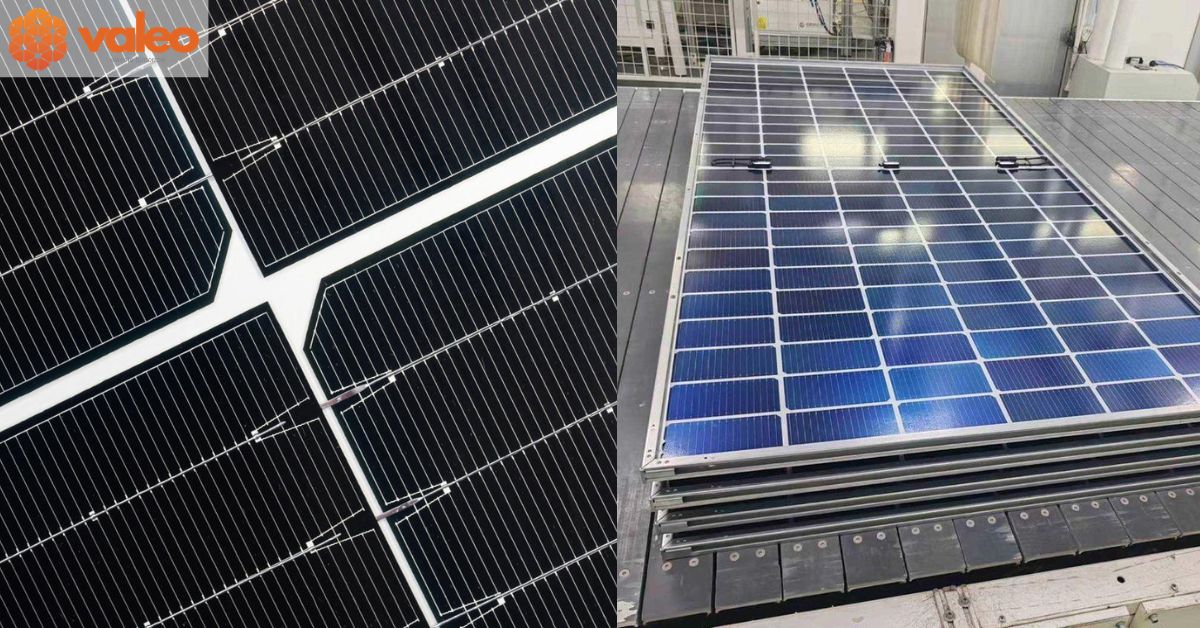
Once several “strings” of cells are created, they are placed side-by-side. Thick Interconnect Ribbons (or Bus Ribbons) are then soldered across the ends of these strings. This collects all the current and routes it toward the Junction Box on the back of the panel.
Why the Material Matters
The choice of PV Ribbon is critical for two main reasons: Conductivity and Thermal Stress.
- Softness is Key: Since solar panels live outdoors, they expand and contract with temperature changes. If the copper ribbon is too stiff, it can crack the brittle silicon cells. Manufacturers use “dead-soft” annealed copper to ensure the ribbon can flex without damaging the cell.
- Solder Composition: Traditionally, a 60/40 Tin-Lead solder was used. However, with the push for “Green” electronics, many manufacturers have shifted to Lead-Free (RoHS compliant) coatings, such as Tin-Silver-Copper alloys.
- Light Harvesting: Modern ribbons often feature grooved or triangular shapes. These are designed to reflect light that hits the ribbon back into the silicon cell, rather than bouncing it away, increasing the panel’s overall efficiency.
Common Challenges in Connection
Even a microscopic flaw in the connection can lead to “hot spots” or panel failure.
- Micro-cracks: Excessive pressure during the soldering of the interconnect wire can cause tiny cracks in the silicon.
- Oxidation: If the solder coating is uneven, the copper can oxidize over time, increasing resistance and dropping the panel’s power output.
- Delamination: If the bond between the ribbon and the cell isn’t perfect, moisture can seep in, leading to the peeling of the conductive layers.
Also Read: Magnet Wire Manufacturer in India
Ribbon vs. Interconnect Wire
Feature | PV Ribbon (Tabbing Wire) | Interconnect Wire (Bus Wire) |
Primary Goal | Collect current from a single cell | Connect strings of cells together |
Placement | Soldered directly to the cell surface | Runs along the edges/ends of strings |
Size | Narrower and thinner | Wider and thicker for higher current |
Flexibility | Extremely high (to protect silicon) | Moderate (to handle high load) |
Conclusion:
The PV ribbon and interconnect wire are the “invisible” heroes of renewable energy. While the silicon cells capture the photon’s energy, it is the ribbon that ensures that energy actually makes it to your home. As solar technology evolves moving toward Multi-Busbar (MBB) designs using round wires the goal remains the same: less resistance, more light, and decades of reliable power.
FAQs
Tabbing Wire, also known as PV Ribbon, is soldered directly onto solar cells to collect the electrical current they generate. Bus Wire, or Interconnect Wire, is wider and thicker and is used to connect multiple strings of cells. It carries the combined current to the solar panel’s junction box. Both are essential components in efficient solar module manufacturing.
Solar cells are made from brittle crystalline silicon and can crack under mechanical stress. Dead-soft annealed copper ribbons are flexible enough to absorb expansion and contraction caused by temperature changes. This prevents micro-cracks and improves the long-term reliability of solar panels. Proper softness is critical for durable and high-performance solar modules.
No, not all PV Ribbons contain lead. Traditional ribbons often used tin-lead (SnPb) coatings because of their excellent soldering properties. Today, many solar manufacturers prefer lead-free, RoHS-compliant coatings such as tin-silver-copper (SnAgCu) or tin-bismuth alloys. These environmentally friendly options support greener solar panel production.
PV Ribbon influences solar panel efficiency through shading and electrical resistance. Wider ribbons can block more sunlight, while thicker copper reduces resistance and improves current flow. Modern solar panels use advanced designs such as Multi-Busbar (MBB) technology to balance both factors. High-quality ribbons help maximize energy output and overall module efficiency.
Hot spots occur when a poor solder joint creates high electrical resistance at a specific point. This localized resistance generates excessive heat during operation. Over time, hot spots can damage the backsheet, reduce panel efficiency, and shorten module lifespan. Using high-quality PV Ribbon and precise manufacturing helps prevent these issues.
Specially designed light-harvesting ribbons have grooved or triangular profiles that reflect sunlight back onto the solar cells. This allows more light to be captured instead of being lost. Such designs can increase solar panel power output by up to 2%. They are widely used in advanced, high-efficiency solar modules.
In most cases, repairing a broken PV Ribbon inside a finished solar panel is not practical. The ribbon is sealed beneath tempered glass and EVA encapsulation, making internal access extremely difficult. Attempting repairs can damage the panel and compromise its performance. Preventing failures with high-quality materials and manufacturing standards is the best solution.