How Oxidation Affects Tinned Copper Interconnects
Tinned copper interconnects are an important part of solar module manufacturing. They connect individual solar cells, carry electrical current, and provide a solderable surface during cell interconnection. Because these ribbons are used in high-volume production, consistent surface quality is important for reliable soldering and stable manufacturing.
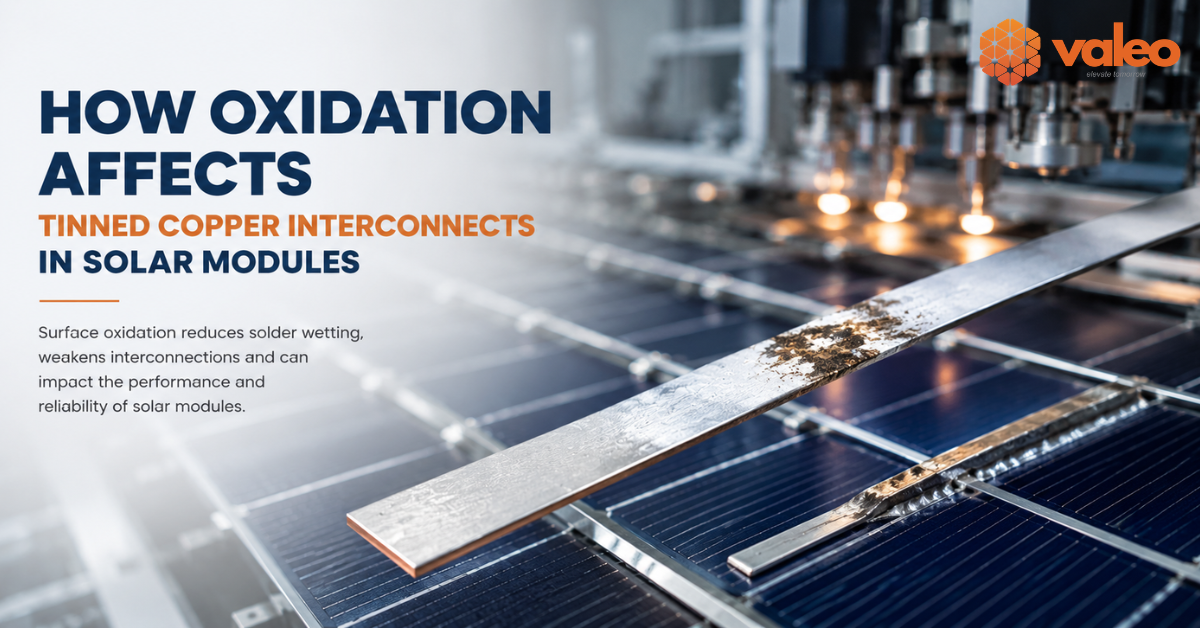
Tinned copper interconnect oxidation can become a concern when ribbon surfaces are exposed to moisture, air, contamination, damaged coating, or unsuitable storage conditions. Oxidation is not the only possible surface problem; coating defects, residues, scratches, and contamination can also affect solderability. Understanding these factors helps solar manufacturers reduce avoidable production issues.
How Does Oxidation Affect Tinned Copper Interconnects?
Tinned copper interconnect oxidation can affect the ribbon surface and make solder wetting less consistent. Moisture, contamination, uneven coating, damaged packaging, and poor handling can increase the risk of surface problems. Using consistent tin-coated ribbon, maintaining clean handling, storing material appropriately, and inspecting the ribbon before production can help reduce oxidation-related concerns.
What Are Tinned Copper Interconnects?
Tinned copper interconnects are flat copper ribbons covered with a thin layer of tin or solderable alloy. Copper provides the main conductive path, while the coating provides a suitable surface for soldering and helps reduce direct exposure of the copper substrate.
During solar module assembly, the ribbon connects one solar cell to another. It therefore needs to provide suitable conductivity, flexibility, solderability, and mechanical performance for the intended application.
Coating quality is particularly important. Thickness, uniformity, adhesion, alloy composition, and surface condition can all influence how the ribbon performs during manufacturing.
What Causes Tinned Copper Interconnect Oxidation?
Several factors can contribute to oxidation or other surface changes on tinned copper ribbon.
1. Moisture Exposure
Humidity and moisture can increase the risk of surface reactions. Ribbon stored for extended periods in an uncontrolled environment may be more susceptible to surface changes, particularly if packaging is damaged or inadequate.
2. Air Exposure
Copper naturally reacts with oxygen. A suitable tin coating reduces direct exposure of the copper underneath, but damaged or incomplete coverage can leave areas more vulnerable to environmental exposure.
3. Uneven or Damaged Coating
A consistent coating helps provide surface protection and a predictable soldering surface. Variations in coverage, coating thickness, or physical damage can create areas that behave differently during production.
4. Poor Surface Preparation
Before coating, the copper surface needs appropriate cleaning and preparation. Oils, residues, dirt, or existing surface oxides can affect coating adhesion and surface quality.
5. Improper Handling
Dirty equipment, dust, moisture, and oils can contaminate the ribbon surface. Scratches or excessive mechanical handling may also damage the coating and expose the underlying material.
6. Poor Storage Conditions
High humidity, unsuitable storage environments, damaged packaging, contamination, and prolonged storage can increase the possibility of surface-related problems before the ribbon reaches the module production line.
Also Read : PV Interconnect Ribbon Failure Causes and Prevention Guide
How Does Oxidation Affect Solderability?

Solderability is one of the main reasons tinned copper interconnects are used in solar cell interconnection. The coating provides the surface that interacts with solder during the joining process.
If the surface has oxidation, contamination, coating irregularities, or other defects, solder may not spread as consistently across the ribbon. Uneven wetting can contribute to variations in soldered connections.
This becomes especially important in automated solar manufacturing, where the same interconnection process must operate consistently across large numbers of cells. A small surface-quality variation can become more significant when repeated across thousands or millions of connections.
What Problems Can Surface Oxidation Cause?
Oxidation and related surface issues can contribute to:
- Reduced solder wetting
- Inconsistent solder bonding
- Connection variation
- Surface contamination
- Production interruptions
- Additional inspection or rework
- Batch-to-batch inconsistency
The actual effect depends on the condition of the ribbon, coating quality, storage environment, soldering process, and other manufacturing variables. For this reason, oxidation should be considered as part of overall ribbon surface quality rather than as an isolated issue.
PV module reliability research
How Can Tinned Copper Interconnect Oxidation Be Prevented?
Prevention starts with controlling the ribbon throughout manufacturing, storage, handling, and module assembly.
Maintain Consistent Coating Quality
The coating should provide suitable coverage across the ribbon surface. Manufacturers should control coating thickness, uniformity, adhesion, and alloy composition according to the application and product specification.
A thicker coating is not automatically better. The coating specification should be appropriate for the ribbon design, cell technology, and soldering process.
Control Surface Preparation
A clean copper surface supports better coating adhesion and helps reduce contamination before tinning. Appropriate surface preparation is therefore an important part of producing consistent coated ribbon.
Use Suitable Packaging and Storage
Tinned copper interconnects should be protected from unnecessary moisture, dust, and contamination. Appropriate packaging and storage conditions help maintain the ribbon surface between manufacturing, transportation, and module assembly.
Handle Ribbon Carefully
Clean equipment and controlled handling can help reduce scratches, bending, dust, and surface contamination. Proper winding, packaging, and transportation practices can also reduce the possibility of physical coating damage.
Inspect Before Production
Solar manufacturers can inspect incoming ribbon before it enters production. Depending on the product specification, checks may include surface appearance, dimensions, coating condition, and solderability.
What Should Manufacturers Check When Buying Tinned Copper Interconnects?
Choosing the right supplier is an important part of maintaining consistent interconnection quality. Buyers should evaluate more than price and consider the complete ribbon specification and quality-control process.
Important factors include:
- Copper quality and conductivity
- Ribbon width and thickness
- Tin coating thickness and uniformity
- Coating adhesion
- Alloy composition
- Surface condition
- Solderability
- Mechanical properties
- Packaging quality
- Storage recommendations
- Quality inspection and testing
- Batch-to-batch consistency
Solar module manufacturers should also consider applicable module construction and environmental requirements when selecting interconnection materials.
Tinned Copper Interconnects from Valeo Products
Valeo Products develops copper-based products for industrial and solar applications, including tinned copper interconnect solutions. For solar manufacturers, the appropriate ribbon depends on factors such as cell technology, ribbon dimensions, coating requirements, alloy, soldering conditions, and production process.
If oxidation, surface quality, or soldering consistency is a concern, reviewing the ribbon specification, coating condition, packaging, storage environment, and handling process is a practical starting point.
Looking for tinned copper interconnects for your solar module application? Share your required ribbon dimensions, coating specification, alloy, quantity, cell technology, and application requirements with Valeo Products to discuss a suitable ribbon solution.
Key Takeaway
Tinned copper interconnect oxidation can affect surface condition and soldering consistency, but oxidation should be considered alongside contamination, coating defects, handling, and storage conditions. Consistent coating, proper surface preparation, suitable packaging, controlled storage, careful handling, and incoming inspection can help reduce avoidable ribbon-quality problems.
For solar manufacturers, the goal is not simply to choose a coated copper ribbon. It is to use an interconnect with consistent specifications and surface quality that suits the complete cell-to-module manufacturing process.
FAQs
Tinned copper interconnect oxidation is a surface reaction that can occur when the ribbon is exposed to oxygen, moisture, or unsuitable environmental conditions. It can affect surface condition and potentially influence soldering performance.
Yes. Oxidation or surface contamination can make solder wetting less consistent, which may contribute to variations in bonding during solar cell interconnection.
Common factors include moisture, air exposure, damaged or uneven coating, poor surface preparation, contamination, improper handling, and unsuitable storage conditions.
Tin coating helps reduce direct exposure of the copper substrate and provides a solderable surface. However, coating coverage, uniformity, adhesion, surface condition, and the storage environment also matter.
Manufacturers can reduce the risk by using consistent coated ribbon, maintaining clean handling, protecting material from moisture and contamination, using suitable packaging and storage, and inspecting ribbon before production.
Coating thickness can influence surface protection, but thicker is not automatically better. The coating should match the ribbon design, alloy, cell technology, and soldering process.
PV ribbon should be kept in suitable packaging and protected from unnecessary moisture, dust, contamination, and physical damage. Storage conditions should follow the supplier's recommendations.
Check copper quality, ribbon dimensions, coating thickness and uniformity, alloy composition, coating adhesion, surface condition, solderability, packaging, testing, and batch-to-batch consistency.