How to Choose Tinned Copper Interconnect for TOPCon Modules
TOPCon solar cells are built for high efficiency. However, module performance depends on more than the cell. The interconnect ribbon also plays an important role.
It affects electrical connection, soldering, production quality, and module reliability.
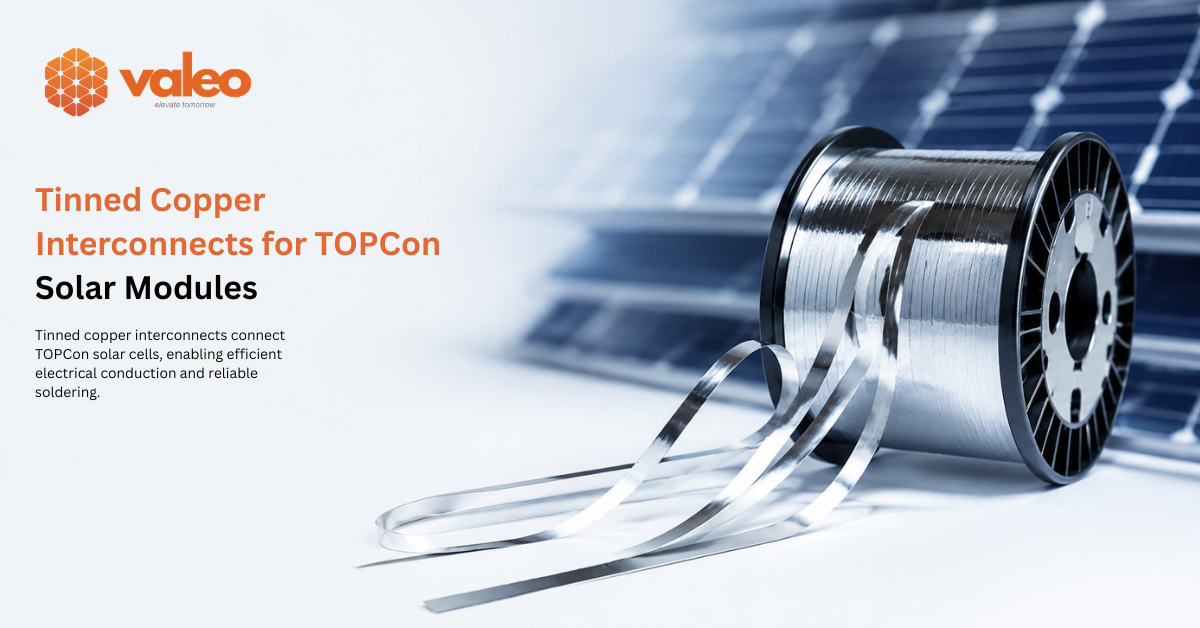
Tinned copper interconnect for TOPCon connect solar cells and carry electrical current. They also provide a solderable surface over the copper core.
Choosing the right interconnect takes more than checking price or basic size. You should also check the alloy, coating, copper quality, dimensions, and soldering process.
This guide explains TOPCon interconnects, why their specifications matter, how to compare suppliers, and what to ask before placing an order.
What Are Tinned Copper Interconnect for TOPCon?
Tinned copper interconnect for TOPCon are copper ribbons coated with tin or another solderable alloy. They connect individual solar cells and provide a conductive, solderable path during module assembly.
For TOPCon modules, the ribbon needs to match the cell design, metallization, soldering process, alloy requirements, dimensions, and mechanical requirements. There is no single universal ribbon specification for every TOPCon application.
Why Do Tinned Copper Interconnect Matter in TOPCon Modules?
TOPCon cells need careful control during module production. The interconnect ribbon is an important part of this process.
It must carry current, support good soldering, and handle mechanical stress. It must also work well with the module production process.
Solderability
The tin or solder alloy forms the outer surface of the ribbon. This surface connects with the solder during cell stringing.
A consistent coating can help the solder spread and bond properly. It can also help reduce soldering problems during production.
As a result, good solderability can support more stable and consistent stringing.
Low-Temperature Soldering Compatibility
Some TOPCon modules use lower soldering temperatures. This can help reduce heat stress on the cells.
In these cases, a suitable low-temperature alloy may be useful. However, the alloy must match the cell contacts and production process.
There is no single alloy that works for every TOPCon production line. Always check the alloy with the actual cell and soldering conditions.
Electrical Performance
Copper has high electrical conductivity. This makes it a good material for solar cell interconnection.
However, copper quality is not the only factor. Ribbon width and thickness also affect electrical performance.
The complete ribbon design should match the electrical needs of the module.
Mechanical Performance
The ribbon goes through bending and handling during module production. It also faces temperature changes during module operation.
Therefore, flexibility and coating adhesion are important. Ribbon width and thickness can also affect handling.
A suitable ribbon should perform well during production and remain stable during module operation.
Corrosion Protection
The coating helps protect the copper core from oxidation and moisture.
Good coating coverage is important. Exposed or damaged copper can have a higher risk of corrosion.
For this reason, manufacturers should check coating quality and uniformity when comparing interconnect suppliers.
What Should You Consider When Selecting TOPCon Interconnect?

Start with your production requirements, then compare products against those requirements.
1. Select the Solder Alloy
The alloy needs to be compatible with the soldering temperature, cell metallization, and production process. Depending on the application, lead-free or low-temperature alloy systems may be considered.
2. Check Coating Consistency
Ask how coating thickness and uniformity are controlled and verified. Consistent coating can support predictable soldering and reduce variation between production lots.
3. Evaluate Copper Quality
Copper forms the conductive core, so its material and electrical properties matter. Ask the supplier for relevant copper specifications and quality information.
4. Check Ribbon Dimensions
Match ribbon width and thickness to the cell and module design. Compare copper thickness, coating thickness, overall thickness, and width rather than relying on a single measurement.
5. Review Mechanical Requirements
Depending on the application, evaluate flexibility, adhesion, peel strength, and handling performance. The ribbon needs to work during manufacturing and under the expected operating conditions of the finished module.
Also Read : HJT Tinned Copper Interconnect Guide
Standard Ribbon vs. TOPCon Interconnect
Not every ribbon has the same requirements. A ribbon suitable for one cell technology may require different alloy, dimensions, or processing characteristics for another.
Feature | Standard Ribbon | TOPCon Applications |
Material | High-purity copper with solderable coating | Copper-based interconnects with tin and other alloy options |
Cell Interconnect | Application dependent | 0.35–2.0 mm width; 0.15–0.30 mm thickness |
Round Interconnect | Application dependent | 0.23–0.36 mm |
Bussing Ribbon | Based on module design | 3–10 mm width; 0.25–0.50 mm thickness |
Alloy Options | Standard solder alloys | Sn/Pb, Sn/Ag, Sn/Ag/Cu and low-temperature Sn/Bi alloys |
TOPCon-optimized does not mean there is one universal ribbon specification. The right product depends on cell design, soldering conditions, module construction, and customer requirements.
international photovoltaic module standards
Common Mistakes When Selecting Interconnect for TOPCon
A lower material price can become expensive if the ribbon causes production problems. Common mistakes include:
- Selecting a ribbon without checking soldering compatibility.
- Comparing products only by price.
- Ignoring coating consistency and tolerance.
- Overlooking copper and ribbon dimensions.
- Failing to evaluate mechanical requirements.
- Choosing a supplier without reviewing quality controls.
- Not discussing application-specific requirements.
A complete technical comparison before production can help prevent avoidable issues.
Questions to Ask Your Tinned Copper Interconnect Supplier
Before selecting a supplier, ask:
- Which solder alloy options are available?
- How is coating thickness controlled?
- How is coating uniformity verified?
- What quality tests are performed before shipment?
- Can the required ribbon width and thickness be supplied?
- Are lead-free or low-temperature alloy options available?
- Can the ribbon be customized for the manufacturing process?
- Does production operate under an ISO-certified quality system?
- Are RoHS-compliant configurations available?
- Can the supplier provide technical support for application-specific requirements?
A supplier that can clearly explain materials, manufacturing controls, testing, and customization is better positioned to support consistent production.
Why Choose Valeo Products for TOPCon Interconnect?
Valeo Products manufactures tinned copper interconnect and photovoltaic panel conductors for renewable energy applications. Its product portfolio includes tinned copper interconnects, PV ribbons, and other specialized non-ferrous conductors.
Valeo has more than four decades of experience manufacturing specialized copper wire solutions and states that it has an annual manufacturing capacity of up to 10,000 tons. The company also holds ISO and RoHS certifications.
For solar manufacturers, this combination of manufacturing experience, product capability, quality focus, and customization can be useful when standard ribbon specifications do not fully match a production process.
If you are evaluating tinned copper interconnects for TOPCon, share your required ribbon dimensions, alloy preference, cell technology, and soldering conditions with Valeo’s team to discuss a suitable solution.
Conclusion
TOPCon technology has raised performance expectations for modern solar modules, making consistent component quality important. Tinned copper interconnects provide the electrical connection between cells while supporting solderability, surface protection, and mechanical performance.
When selecting a TOPCon interconnect, look beyond one specification. Evaluate the alloy, coating consistency, copper properties, ribbon dimensions, mechanical requirements, quality controls, and customization options.
The right supplier should be able to provide consistent products and understand your manufacturing requirements.
Need a TOPCon interconnect for your solar module production? Contact Valeo to discuss your ribbon dimensions, coating requirements, alloy, and application.
Frequently Asked Questions
Tinned copper interconnect connect individual TOPCon solar cells and provide a conductive path for current. The tin or solder-alloy coating also provides a solderable surface and helps protect the copper substrate.
Standard PV ribbon may be suitable for some TOPCon applications, but its alloy, coating, dimensions, soldering characteristics, and mechanical properties should match the specific cell and module manufacturing process.
TOPCon modules can use tinned copper interconnect ribbons with specifications selected according to the cell design, soldering process, ribbon dimensions, and alloy requirements. Lead-free and low-temperature alloy options may be considered for suitable applications.
Tin coating provides a solderable surface for cell interconnection and helps protect the copper substrate from oxidation and corrosion. Consistent coating also supports predictable soldering during module assembly.
The suitable solder alloy depends on the cell metallization, soldering temperature, and manufacturing process. Depending on the application, manufacturers may consider lead-free or low-temperature alloy systems.
Check copper properties, ribbon width, copper and overall thickness, coating specification, alloy composition, coating consistency, solderability, mechanical properties, and compatibility with the intended TOPCon manufacturing process.
Yes, application-specific customization may be available. Manufacturers can discuss requirements such as ribbon dimensions, alloy selection, cell technology, coating characteristics, and soldering conditions with the supplier.
Look for consistent coating control, suitable alloy options, controlled ribbon dimensions, quality testing, compliant materials, manufacturing experience, customization capability, and technical support for your production requirements.