
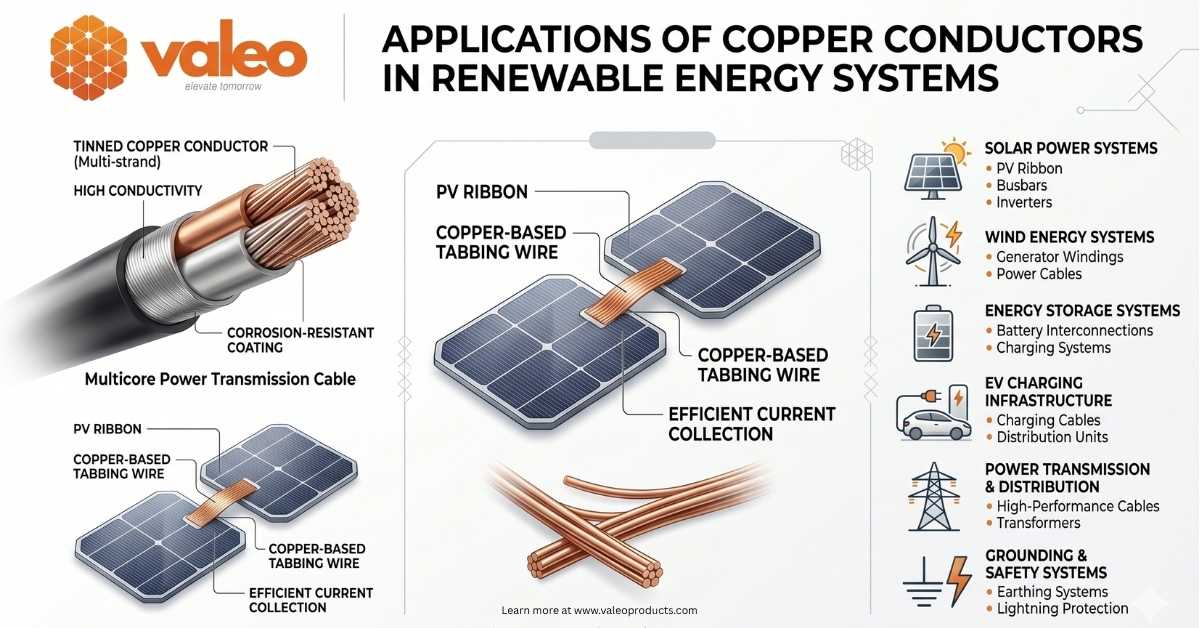
As the world shifts towards clean and sustainable energy, the demand for efficient and reliable materials has increased significantly. Among these, copper conductors play a crucial role in ensuring high performance across renewable energy systems. Known for their excellent electrical conductivity, durability, and flexibility, copper conductors are widely used in solar, wind, and other green energy applications.
What are Copper Conductors?
Copper conductors are electrical components made from copper, designed to carry electric current with minimal resistance. Due to copper’s superior conductivity, it is one of the most preferred materials in electrical and energy systems.
Why Copper is Ideal for Renewable Energy
1. High Electrical Conductivity
Copper offers one of the highest electrical conductivity levels among metals, ensuring minimal energy loss during transmission.
2. Excellent Thermal Performance
It can handle high temperatures without degrading, making it suitable for demanding renewable energy environments.
3. Corrosion Resistance
Copper resists corrosion, especially when treated or coated, making it ideal for outdoor installations.
4. Long Lifespan
Copper conductors provide long-term reliability, reducing maintenance and replacement costs.
Key Applications of Copper Conductors in Renewable Energy Systems
1. Solar Power Systems
Copper conductors are extensively used in solar energy systems, including:
- PV ribbon and tabbing wire for connecting solar cells
- Busbars for efficient current collection
- Inverters and junction boxes
2. Wind Energy Systems
In wind turbines, copper conductors are used in:
- Generator windings
- Power cables
- Grounding systems
3. Energy Storage Systems
Copper plays a key role in battery systems used for storing renewable energy:
- Battery interconnections
- Charging systems
- Power management units
4. Electric Vehicle (EV) Charging Infrastructure
With the rise of electric vehicles, renewable energy is increasingly used to power EV charging stations. Copper conductors are used in:
- Charging cables
- Internal wiring systems
- Power distribution units
5. Power Transmission and Distribution
Copper conductors are essential for transmitting renewable energy from generation sites to consumers. They are used in:
- High-performance cables
- Transformers
- Switchgear systems
6. Grounding and Safety Systems
Proper grounding is critical in renewable installations. Copper is widely used for:
- Earthing systems
- Lightning protection
- Safety connections
Also Read: PV Ribbon Valeo Products Powering High-Efficiency Solar Panels
Advantages of Using Copper Conductors in Renewable Energy
- Higher efficiency and reduced energy loss
- Increased system reliability
- Better resistance to environmental conditions
- Lower long-term maintenance costs
- Compatibility with advanced technologies
Conclusion
Copper conductors are the backbone of modern renewable energy systems. From solar panels to wind turbines and energy storage systems, their role is indispensable. Their superior conductivity, durability, and reliability make them the preferred choice for ensuring efficient and long-lasting renewable energy solutions.
