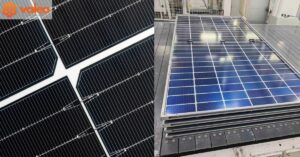

HJT Tinned Copper Interconnect: Benefits, Uses & Selection Guide
HJT tinned copper interconnect is a key component in high-efficiency heterojunction (HJT) solar modules. Designed for low-temperature soldering, it enables reliable electrical connections while protecting heat-sensitive HJT cells during manufacturing. Compared to conventional interconnect ribbons, HJT-specific tinned copper interconnects improve electrical conductivity, reduce thermal stress, and enhance long-term module reliability. This guide explains how HJT tinned copper interconnects work, their key benefits, and why choosing the right manufacturer is essential for consistent, high-quality solar module production.
What Is an HJT Tinned Copper Interconnect?
An HJT tinned copper interconnect is a precision-manufactured copper ribbon coated with a tin or lead-free solder alloy that electrically connects individual HJT solar cells while supporting low-temperature soldering and reliable current transfer.
A high-quality HJT tinned copper interconnect combines a high-purity copper core for excellent electrical conductivity and mechanical strength with a precisely controlled tin coating that delivers reliable electrical connections, corrosion resistance, and consistent performance. Unlike conventional PV ribbons, HJT interconnects are engineered to perform at lower soldering temperatures while maintaining strong electrical and mechanical integrity.
Key Features
- High electrical conductivity for efficient current transfer
- Low-temperature solder compatibility for HJT solar cells
- High-purity copper core for mechanical stability
- Uniform tin coating for consistent electrical performance
- Excellent corrosion resistance for long-term durability
- Optimized for automated solar module manufacturing
These features help manufacturers improve production efficiency, reduce defects, and produce reliable, high-efficiency HJT solar modules.
Why HJT Solar Modules Need Tinned Copper Interconnects
HJT solar modules require specialized tinned copper interconnects because their temperature-sensitive cell structure can be damaged by conventional high-temperature soldering processes.
Heterojunction Technology (HJT) uses advanced semiconductor layers to deliver higher solar cell efficiency and lower degradation than conventional technologies. However, standard interconnect ribbons can increase thermal stress, contact resistance, and cell cracking, reducing module performance. HJT tinned copper interconnects solve these challenges by providing low-temperature soldering, high peel strength, and excellent electrical conductivity, helping manufacturers improve production yield, module reliability, and long-term efficiency.
Benefits of High-Quality HJT Tinned Copper Interconnects
1. High Electrical Conductivity
High-purity copper reduces electrical resistance, enabling efficient current transfer between HJT solar cells.
Benefits:
- Lower electrical losses
- Higher module efficiency
- Improved energy output
- Stable electrical performance
2. Low-Temperature Solder Compatibility
HJT interconnects are designed for low-temperature soldering, protecting heat-sensitive HJT cells while creating reliable solder joints.
Benefits:
- Reduced thermal stress
- Stronger solder joints
- Higher production yield
- Lower risk of cell damage
3. Uniform Tin Coating
A uniform tin coating provides a consistent surface finish that supports dependable electrical performance and long-term durability in HJT solar module manufacturing.
Benefits:
- Consistent coating quality
- Improved corrosion protection
- Stable electrical performance
- Suitable for automated manufacturing processes
4. Excellent Mechanical Flexibility
Flexible interconnects minimize stress on thin HJT solar cells during stringing and module assembly.
Benefits:
- Reduced cell breakage
- Better thermal expansion tolerance
- Improved module durability
- Longer service life
5. Superior Corrosion Resistance
A high-quality tin coating protects the interconnect from moisture, oxidation, and harsh environmental conditions, ensuring long-term reliability.
Benefits:
- Prevents corrosion
- Maintains electrical conductivity
- Extends module lifespan
- Reduces maintenance and warranty costs
Using premium HJT tinned copper interconnects helps manufacturers improve production consistency, achieve reliable peel strength, and deliver high-performance solar modules for residential, commercial, and utility-scale applications.
How HJT Tinned Copper Interconnect Enhances Modules
Choosing the right HJT tinned copper interconnect improves not only electrical efficiency but also manufacturing productivity, module reliability, and long-term return on investment.
Unlike conventional PV ribbons, HJT tinned copper interconnects are designed for advanced HJT cell architectures and automated manufacturing. They help manufacturers:
Reduce electrical losses
Improve solder joint consistency
Increase production yield
Minimize cell cracking
Enhance module reliability
Extend solar module lifespan
HJT Tinned Copper Interconnect Specifications
HJT tinned copper interconnects are available in a range of sizes and coating options to meet different solar cell designs and manufacturing requirements. Selecting the correct dimensions improves soldering consistency, electrical performance, and compatibility with automated production lines.
Although exact specifications vary by manufacturer, most HJT interconnect ribbons can be customized based on the customer’s cell architecture and production process.
Parameter | Typical Specification |
Base Material | High-purity copper |
Surface Coating | Tin or lead-free solder alloy |
Width | Customized as per cell design |
Thickness | Application-specific |
Conductivity | High electrical conductivity |
Solder Compatibility | Low-temperature soldering |
Application | HJT solar modules |
HJT Interconnect Manufacturing Best Practices
Producing reliable HJT tinned copper interconnects requires strict process control, precision engineering, and continuous quality inspection. Even minor variations in coating thickness or ribbon dimensions can affect module performance and manufacturing yield.
At every stage of production, precision matters.
High-Purity Copper Selection: The process begins with premium-grade copper, which provides excellent electrical conductivity, low resistance, and the mechanical strength needed for efficient current transfer.
Precision Rolling: The copper is rolled to precise thickness and width tolerances, ensuring uniform current distribution and smooth compatibility with automated stringing equipment.
Surface Preparation: Before tin coating, the copper ribbon is thoroughly cleaned to remove surface contaminants. This ensures better coating adhesion, a uniform surface finish, and long-term reliability of the finished HJT interconnect.
Controlled Tin Coating: The tin coating process is carefully controlled to achieve a uniform coating thickness, consistent electrical performance, enhanced corrosion resistance, and reliable quality for HJT solar module manufacturing.
Quality Inspection: Every batch undergoes rigorous testing to verify ribbon dimensions, coating thickness, surface finish, electrical conductivity, tensile strength, and overall quality consistency. These inspections help ensure the interconnect meets industry standards and delivers reliable performance in high-efficiency HJT solar modules.
Standard Ribbon vs. HJT Tinned Copper Interconnect
| Feature | Standard Solar Ribbon | HJT Tinned Copper Interconnect |
| Soldering Temperature | Typically designed for conventional soldering temperatures | Compatible with lower-temperature HJT manufacturing processes |
| Cell Compatibility | Suitable for conventional solar cell technologies | Designed for HJT solar cell applications |
| Electrical Conductivity | High conductivity | High conductivity with optimized design for HJT modules |
| Tin Coating | Standard tin coating | Uniform tin coating for consistent quality |
| Manufacturing Process | Conventional PV module production | Optimized for HJT module manufacturing |
For manufacturers producing HJT solar modules, dedicated HJT tinned copper interconnects are designed to support low-temperature processing, consistent electrical performance, and reliable manufacturing quality. Their compatibility with HJT cell technology makes them well suited for advanced solar module production.
How to Choose an HJT Tinned Copper Interconnect Supplier
Selecting an HJT tinned copper interconnect supplier involves more than comparing prices. The right supplier helps improve production efficiency, reduce defects, and ensure consistent module quality.
Industry Experience
Choose a supplier with proven experience in manufacturing interconnects for HJT, TOPCon, and other high-efficiency solar technologies. Technical expertise helps ensure the product meets evolving industry requirements.
Manufacturing Capacity
A supplier with modern production facilities and scalable manufacturing capabilities can support both high-volume orders and changing production demands without compromising quality.
Compliance with Industry Standards
Ensure the supplier follows recognized quality standards and maintains strict manufacturing processes to deliver consistent and reliable products.
Custom Engineering Support
Look for a supplier that can develop interconnects based on your cell design, soldering process, and production line requirements rather than offering only standard products.
Stable Global Supply Chain
Reliable inventory management, on-time delivery, and consistent raw material sourcing help prevent production delays and keep manufacturing schedules on track.
Responsive Technical Assistance
A trusted supplier should provide ongoing technical support, helping optimize product selection, troubleshoot manufacturing challenges, and improve production efficiency.
Partnering with an experienced manufacturer like Valeo Products gives solar module manufacturers access to precision-engineered HJT tinned copper interconnects, consistent quality, and dependable technical support for long-term production success.
Why Choose Valeo Products for HJT Tinned Copper Interconnect?
With over 40 years of industry experience, Valeo Products manufactures precision-engineered HJT tinned copper interconnects for high-efficiency solar module production. Using high-purity copper, controlled tin coating processes, and strict quality standards, our interconnects deliver reliable low-temperature soldering, excellent electrical conductivity, and long-term performance.
We also provide customized interconnect solutions to meet specific manufacturing requirements, backed by technical expertise, dependable supply, and consistent product quality. By partnering with Valeo Products, solar manufacturers can improve production efficiency, reduce defects, and produce reliable HJT solar modules with confidence.
Conclusion
HJT tinned copper interconnects play a vital role in the performance of high-efficiency HJT solar modules. Designed for compatibility with low-temperature HJT manufacturing processes, they provide excellent electrical conductivity, a uniform tin coating, corrosion resistance, and consistent quality. Selecting the right interconnect helps manufacturers achieve stable production and reliable module performance.
Planning to manufacture high-efficiency HJT solar modules? Valeo Products offers precision-engineered HJT tinned copper interconnects with customized dimensions, high-purity copper, uniform tin coating, and consistent quality for advanced solar manufacturing. Contact our technical specialists to discuss your project requirements and find the right interconnect solution for your production line.
FAQs
An HJT tinned copper interconnect is a tin-coated copper ribbon designed to electrically connect HJT solar cells while supporting low-temperature soldering and reliable current transfer.
HJT solar cells are highly sensitive to heat. Specialized interconnect ribbons support low-temperature soldering, reducing thermal stress and protecting delicate cell structures during manufacturing.
They provide excellent electrical conductivity, reliable solderability, strong peel strength, corrosion resistance, and improved long-term module reliability.
Standard ribbons may not provide the low-temperature soldering performance required for HJT cells. Using HJT-specific interconnects helps improve manufacturing quality and module efficiency.
High-quality interconnects reduce electrical resistance, improve solder joint reliability, minimize cell damage, and support higher energy output throughout the module's service life.
Yes. Manufacturers can customize ribbon width, thickness, coating composition, and mechanical properties to match specific HJT cell designs and production requirements.
Evaluate the supplier's manufacturing experience, copper purity, coating consistency, dimensional accuracy, quality control processes, customization capabilities, and technical support.
Low-temperature soldering minimizes thermal stress on HJT cells, reduces the risk of microcracks, preserves cell efficiency, and improves long-term module reliability.