Low-Temperature Solder Alloys for Solar Cell Interconnection
When solar-cell interconnection requires tighter control of heat, the solder alloy becomes an important process consideration. Low-temperature solder alloys can help form a connection at a lower processing temperature, but selection involves more than comparing melting points. Cell metallization, wetting, heating conditions, joint performance and reliability all need to be considered together.
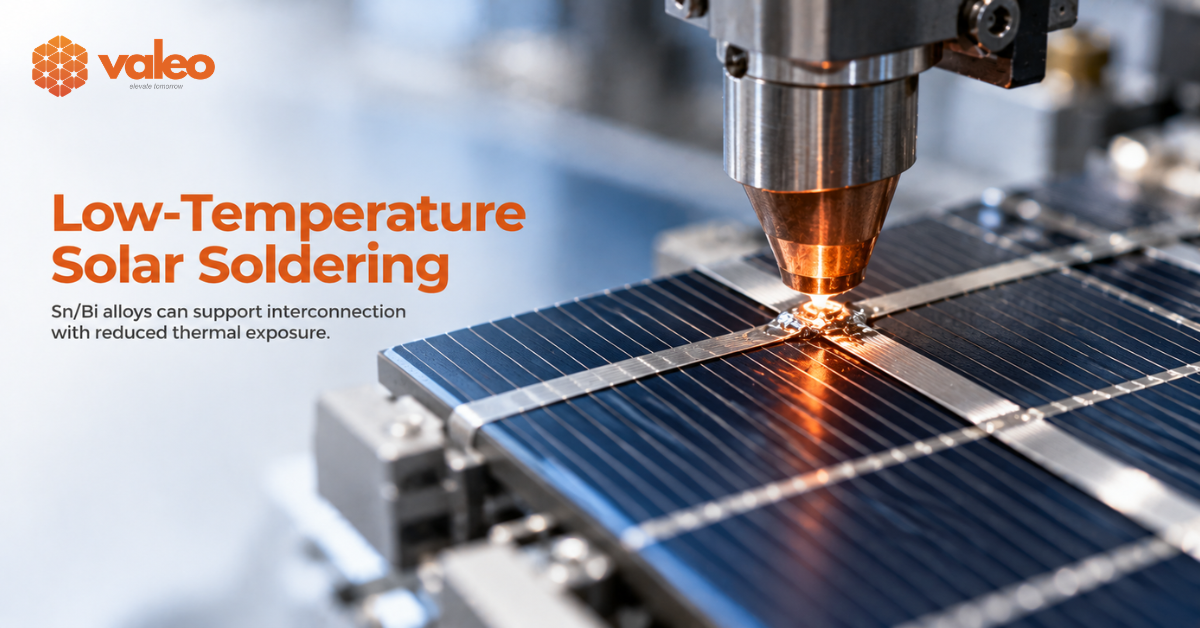
Low-temperature solder alloys for solar cells enable interconnection at lower processing temperatures, helping reduce thermal exposure during cell and ribbon joining. Sn/Bi alloys are commonly evaluated based on melting temperature, wetting, cell metallization, soldering conditions and joint reliability.
What Is a Low-Temperature Solder Alloy?
A low-temperature solder alloy is an alloy system selected to form a soldered connection at a relatively lower processing temperature. In solar-cell interconnection, the solderable material must work with the cell metallization and the production process.
Sn/Bi is one relevant example. Bismuth can lower the melting temperature of tin-based solder systems, making Sn/Bi useful to evaluate where lower-temperature processing is required. However, different formulations can behave differently during melting, wetting and solidification.
The key question is not simply how low the melting point is. It is whether the alloy can form the required connection under the intended production conditions.
Why Is Lower-Temperature Processing Considered?
Thermal control is the main reason to evaluate a lower-temperature solder system. When a solar cell or interconnection process has tighter limits on heat exposure, reducing the temperature used to form the joint may be worth considering.
A lower-temperature alloy can also require changes to the heating profile. Temperature, heating rate, dwell time and cooling conditions can affect how the joint forms. For this reason, the alloy should be evaluated as part of the complete interconnection process rather than as a standalone material.
Why Are Sn/Bi Alloys Considered?
Sn/Bi solder alloys are considered because bismuth can reduce the melting temperature of tin-based solder systems. This makes them relevant when a lower-temperature process is being investigated.
Their suitability still depends on the application. The alloy needs to wet the cell contact consistently and form a joint that meets the required electrical and mechanical characteristics. An alloy that performs well with one cell metallization or process profile may not produce the same result with another.
How Does Cell Technology Affect Alloy Selection?
Cell technology is an important part of the selection process, but this article is focused on alloy and process selection rather than any one cell technology.
TOPCon cells: The alloy and process should be assessed against the specific cell metallization and interconnection requirements.
HJT cells: Lower-temperature interconnection can be considered where thermal exposure is an important process consideration. See our guide to HJT tinned copper interconnect for more on this application.
PERC cells: Low-temperature solder systems can be evaluated when the existing interconnection process requires an alternative thermal profile.
Other advanced cell technologies: Compatibility should be established through testing of the alloy, cell contacts and intended production process.
The important point is to evaluate the alloy against the actual cell contact and process rather than assuming that one alloy is suitable for every technology.
What Factors Affect Solder Joint Quality?
A practical evaluation should cover several factors:
Cell metallization: The alloy must be compatible with the contact surface so the intended interface can form.
Wetting: The solderable material should spread consistently across the intended contact area. Poor or inconsistent wetting can affect joint formation.
Soldering profile: Temperature is only one part of the process. Heating rate, dwell time and cooling conditions should also be evaluated.
Joint performance: The finished connection should be checked for the required electrical and mechanical performance.
Reliability: Where appropriate, the finished connection should be evaluated under relevant reliability conditions.
These checks help determine whether the lower-temperature process provides a useful thermal advantage without creating problems in the finished interconnection.
How Should You Choose a Low-Temperature Solder Alloy?
Selection should start with the solar cell and production process, not simply with the alloy’s melting point.
- Identify the cell technology and metallization.
- Define the acceptable processing temperature range.
- Shortlist suitable alloy systems.
- Test wetting and joint formation with the actual cell contact.
- Measure electrical and mechanical performance.
- Conduct relevant reliability testing.
- Confirm repeatability on the intended production equipment.
This process provides a stronger basis for alloy selection because it connects material choice with actual cell and manufacturing requirements.
Low-Temperature Alloy Options from Valeo Products
Valeo Products offers solar interconnection solutions that include low-temperature alloy options. The appropriate configuration depends on the cell technology, interconnection process and required connection performance.
For product configurations and commercial specifications, refer to Valeo’s main Tinned Copper Interconnect product page.
Conclusion
Low-temperature solder alloys can be useful when solar-cell interconnection requires tighter control of processing heat. Sn/Bi systems are one option because bismuth can lower the melting temperature of tin-based solder.
However, alloy selection should not be based on melting temperature alone. Cell metallization, wetting, heating conditions, joint performance and reliability all need to be evaluated with the intended application.
FAQs
Low-temperature solder alloys are solder systems that form solar-cell interconnections at lower processing temperatures. Their suitability depends on the alloy, cell metallization and interconnection process.
Sn/Bi alloys are considered because bismuth lowers the melting temperature of tin-based solder systems. This makes them relevant for solar-cell interconnection processes requiring lower processing temperatures.
No, a lower melting point does not guarantee better solder performance. Wetting, cell compatibility, joint performance and reliability also need to be evaluated.
Low-temperature solder joint quality depends on wetting, cell metallization, alloy composition and the soldering profile. Dwell time, cooling conditions and final electrical and mechanical performance also matter.
A low-temperature solder alloy should be tested with the actual solar-cell contact and production process. Testing should evaluate wetting, joint formation, electrical and mechanical performance, and relevant reliability conditions.
Manufacturers should consider low-temperature soldering when tighter control of processing heat is required. The selected alloy should first be validated for cell compatibility, joint performance and production conditions.