Magnet Wire in Electric Vehicle Motors: What It Does and How to Choose It
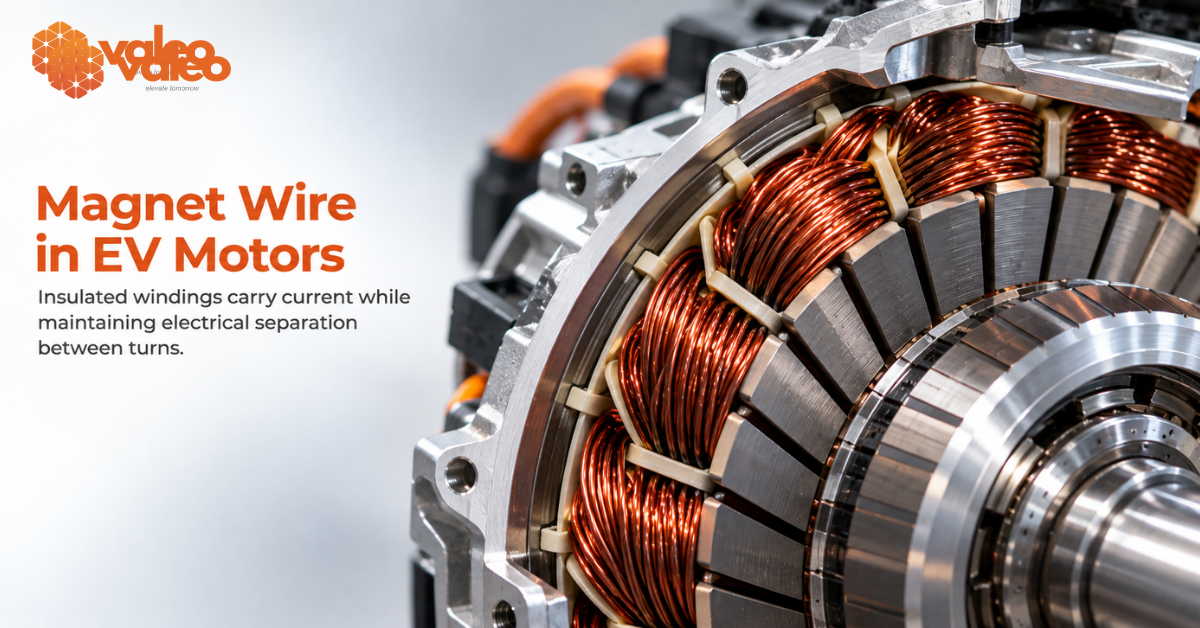
Open an EV motor and most of what you see is copper wire wrapped in a thin coat of insulation. That wire is magnet wire, and it does the main job: it carries the current that creates the magnetic field that turns the rotor.
If you design, buy or source winding wire for EV motors, your choice affects efficiency, heat, reliability and how smoothly your winding line runs. This guide covers what the wire does and what to check before you finalise a specification.
In short: Magnet wire in an electric vehicle motor is insulated copper wire wound into coils. It carries current, keeps neighbouring turns apart, and has to handle heat, vibration and repeated voltage stress for years.
What Magnet Wire Does Inside an EV Motor
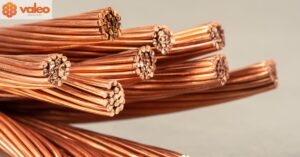
Magnet wire, also called winding wire or enamelled wire, is a conductor covered by a very thin insulating coat.
In an EV motor, these turns form the coils in the stator, the fixed part of the motor. When the inverter sends current through the coils, they create a rotating magnetic field. The rotor follows it, and that produces torque.
The wire’s resistance decides how much energy turns into heat. Its insulation decides whether the coil stays healthy. Its size and shape decide how much copper fits in each slot. For wider background, see our magnet wire page.
Round Wire or Rectangular Wire?
EV motors use two main forms. Round wire is common in conventionally wound stators. Rectangular (flat) wire is common in hairpin-style stators, where it is formed into pins, inserted into slots and joined.
Rectangular wire fills the slot better, which can help with power density and moving heat out of the winding. It is also less forgiving, because bending flat wire stresses the coating at the corners. If your design calls for flat or profiled conductors, see our bare or shaped conductors.
Five Things to Check Before You Choose
1. Insulation that handles voltage stress. EV inverters switch fast, and that puts sharp voltage spikes on the winding. Weak insulation can fail between turns over time. Ask how breakdown voltage is tested.
2. Thermal class that fits real operating temperature. The insulation must keep its properties at the temperatures your motor actually reaches, with margin. Valeo Products’ published magnet wire range covers 120°C to 220°C, with PE, PU, PEI, PAI and dual-coat insulation systems. These are Valeo’s own ranges, not a rule for every EV motor. The right class comes from your design, duty cycle and cooling.
3. Conductor resistance. Winding resistance turns into heat, so clean, consistent copper helps keep losses predictable from coil to coil.
4. Dimensional consistency. Winding machines expect the wire to stay the same size along the whole spool. Drift changes coil shape and slot fill, and pushes rejects up.
5. Flexibility and mechanical strength. The wire is bent, pulled and inserted during winding. The coating must flex without cracking and resist scraping on slot edges.
Why Quality Testing Matters
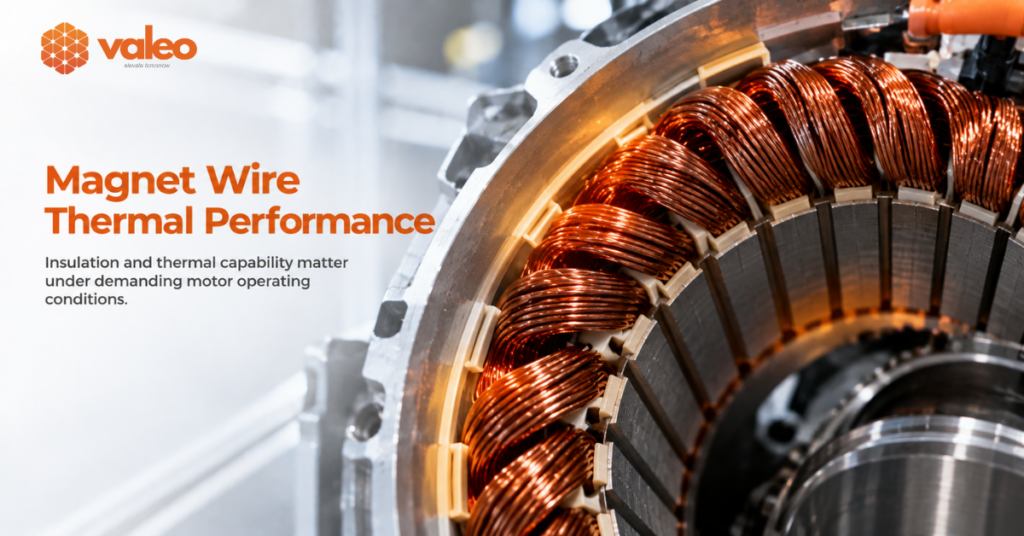
A motor winding can have thousands of turns, and one weak spot in the coating can become a failure point. Valeo’s published quality information describes breakdown-voltage testing, pinhole detection and non-contact dimensional measurement.
When you compare suppliers, ask which tests are done and whether results are shared with each lot. You can read how we approach this on our quality page.
Conclusion
Magnet wire is a small part of an EV motor by cost, but a big part by consequence. The best choice depends on your winding design, operating temperature and production process, not on a generic “EV grade” label.
Start from your motor’s requirements, ask for test data, and trial samples on your line. To see what is available, visit our page on magnet wire manufacturer in India, or contact the Valeo Products team with your specifications.
FAQs
Magnet wire forms the coils in the motor's stator. It carries current to create the magnetic field that drives the rotor, and its thin insulation keeps neighbouring turns apart.
Thousands of turns sit close together, and only the coating keeps them separate. Inverter voltage spikes add stress, so weak insulation can lead to turn-to-turn shorts.
Yes. Winding losses create heat, and hard driving adds more. The insulation must keep working at your motor's real temperatures, with margin.
Conductor resistance becomes heat, so consistent copper reduces losses. Wire size and shape also affect how much copper fits in each slot.
Winding machines need wire that stays the same size along the spool. Variation changes coil shape and raises rejects.
Wire shape, conductor size, insulation system, thermal class, coating at bends, lot-level test data and spool packaging. Then trial samples on your own line.