
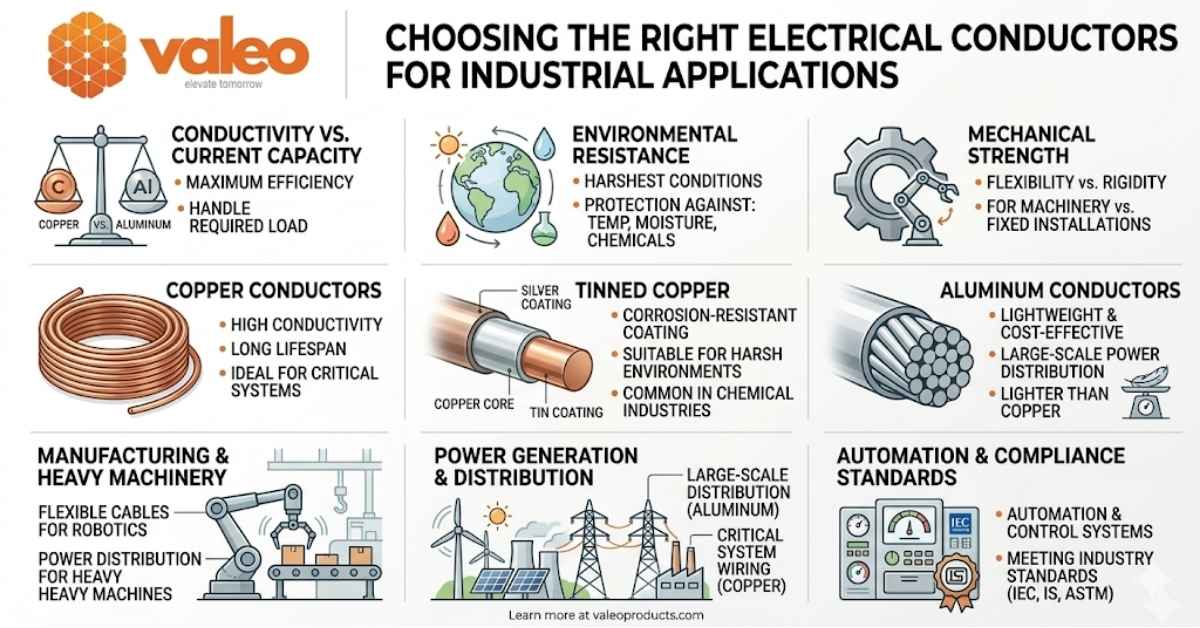
Best Electrical Conductors for Industrial Use
Selecting the right electrical conductors for industrial applications is critical for ensuring safety, efficiency, and long-term performance. Industries rely heavily on robust electrical systems, and choosing the wrong conductor can lead to energy losses, overheating, and costly downtime.
What Are Electrical Conductors?
Electrical conductors are materials that allow the flow of electric current with minimal resistance. The most commonly used conductors in industrial applications are copper conductors and aluminum conductors.
Why Choosing the Right Electrical Conductor Matters
- Ensures efficient power transmission
- Reduces energy loss and heat generation
- Improves system safety and reliability
- Minimizes maintenance and downtime
- Supports heavy industrial loads
Key Factors to Consider When Choosing Electrical Conductors
1. Electrical Conductivity
The conductor’s ability to carry current efficiently is crucial.
- Copper has higher conductivity than aluminum
- Ideal for applications requiring maximum efficiency
2. Current Carrying Capacity
Choose a conductor that can handle the required load without overheating.
- Consider load demand
- Follow industry standards for sizing
3. Environmental Conditions
Industrial environments can be harsh. Consider:
- Temperature
- Moisture and humidity
- Exposure to chemicals
4. Mechanical Strength and Flexibility
Some applications require flexible wires, while others need rigid conductors.
- Flexible conductors → machinery, moving parts
- Rigid conductors → fixed installations
6. Insulation Type
Proper insulation protects against electrical faults and environmental damage. Common types:
- PVC (Polyvinyl Chloride)
- XLPE (Cross-linked Polyethylene)
- Rubber insulation
7. Voltage Rating
Ensure the conductor matches the system voltage:
- Low voltage
- Medium voltage
- High voltage
8. Compliance with Standards
Always select conductors that meet industry standards such as:
- IEC (International Electrotechnical Commission)
- IS (Indian Standards)
- ASTM
Also Read: PV Ribbon Valeo Products Powering High-Efficiency Solar Panels
Types of Electrical Conductors Used in Industrial Applications
1. Copper Conductors
- High conductivity
- Long lifespan
- Ideal for critical systems
2. Tinned Copper Conductors
- Corrosion-resistant
- Suitable for harsh environments
- Common in chemical and outdoor industries
3. Aluminum Conductors
- Lightweight and cost-effective
- Used in large-scale power distribution
4. Flexible Cables
- Used in robotics and machinery
- Provide ease of installation
Common Industrial Applications
Electrical conductors are used in:
- Manufacturing plants
- Power generation systems
- Renewable energy systems (solar & wind)
- Heavy machinery
- Automation and control systems
Common Mistakes to Avoid
- Choosing undersized conductors
- Ignoring environmental conditions
- Using low-quality materials
- Not following safety standards
- Overlooking future load expansion
Pro Tips for Choosing the Right Conductor
- Always calculate load requirements accurately
- Prefer high-quality copper conductors for critical systems
- Use corrosion-resistant materials for outdoor use
- Ensure proper insulation and certification
- Consult experts or manufacturers for large projects
Conclusion
Choosing the right electrical conductors for industrial applications is essential for ensuring efficiency, safety, and long-term reliability. By considering factors like conductivity, environment, insulation, and compliance, industries can avoid costly failures and improve overall system performance.
Frequently Asked Questions
What is the best conductor for industrial applications?
Copper is considered the best due to its high conductivity, durability, and reliability.
How do I choose the right cable size?
Cable size depends on current load, voltage, and distance. Always follow standard ampacity charts.
Is copper better than aluminum for industrial wiring?
Yes, copper offers better conductivity and longer lifespan, though it is more expensive.
What is ampacity in electrical conductors?
Ampacity refers to the maximum current a conductor can safely carry without overheating.
Which insulation is best for industrial cables?
XLPE insulation is widely preferred due to its high thermal resistance and durability.
Can I use the same conductor for all industrial applications?
No, conductor selection depends on load, environment, and application requirements.
Why is tinned copper used in industries?
It provides better corrosion resistance, making it ideal for harsh environments.
What standards should electrical conductors meet?
They should comply with IEC, IS, or ASTM standards for safety and performance.
How can I improve electrical efficiency in industries?
Use high-quality conductors, proper sizing, and minimize resistance in the system.