
In modern electrical and solar systems, durability, conductivity, and resistance to environmental factors play a critical role in performance. One material that meets all these requirements is tinned copper wire. Widely used across industries, especially in solar applications, tinned copper wire offers enhanced protection and reliability compared to bare copper.
What is Tinned Copper Wire?
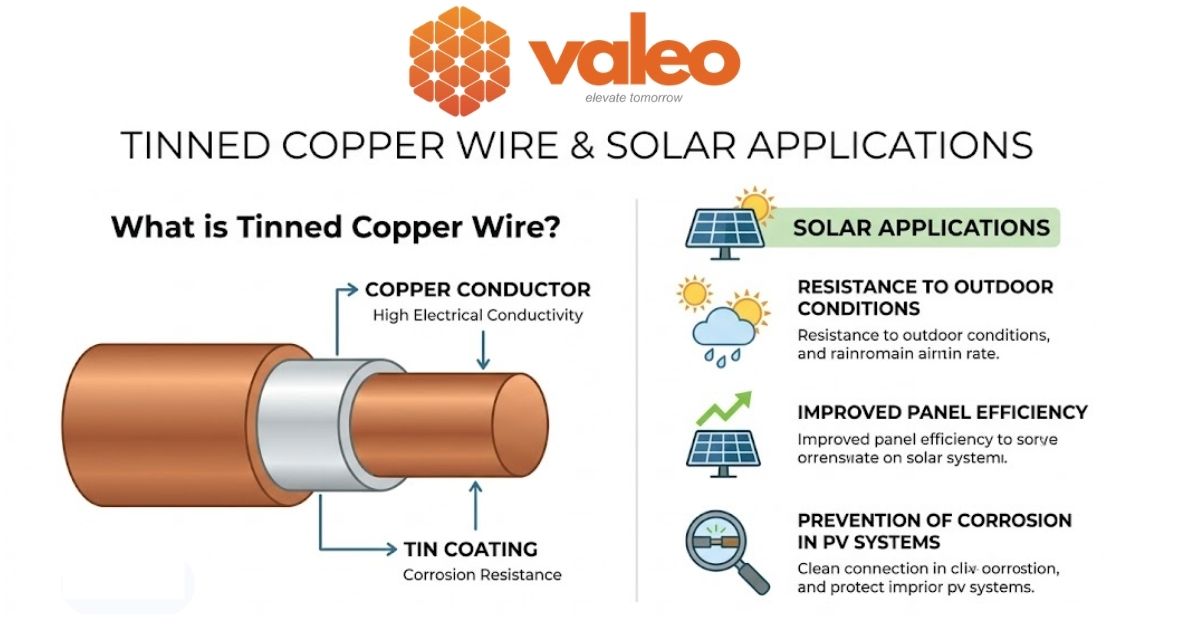
Tinned copper wire is a type of copper wire that is coated with a thin layer of tin. This tin coating acts as a protective barrier, preventing oxidation and corrosion while maintaining the excellent electrical conductivity of copper.
The process of tinning involves either:
- Hot-dip tinning
- Electroplating
Key Properties of Tinned Copper Wire
1. Corrosion Resistance
The tin coating prevents copper from reacting with moisture, air, and chemicals. This makes it ideal for outdoor and high-humidity environments like solar installations.
2. High Electrical Conductivity
Copper is one of the best conductors of electricity. The tin coating does not significantly reduce conductivity, ensuring efficient energy transmission.
3. Enhanced Durability
Tinned copper wire has a longer lifespan compared to bare copper, reducing maintenance and replacement costs.
4. Improved Solderability
The tin layer makes the wire easier to solder, which is crucial in electrical connections and circuit assemblies.
Why Tinned Copper Wire is Used in Electrical Applications
1. Long-Term Reliability
Electrical systems require stable performance over time. Tinned copper wire resists degradation, ensuring consistent conductivity.
2. Protection Against Oxidation
Bare copper tends to oxidize when exposed to air, forming a layer that reduces efficiency. Tinned copper prevents this issue.
3. Ideal for Harsh Environments
It is commonly used in:
- Industrial wiring
- Marine applications
- Underground cabling
4. Reduced Maintenance Costs
Due to its corrosion resistance, systems using tinned copper wire require fewer repairs and replacements.
Also Read: Copper Ribbon for Solar Panels
Importance of Tinned Copper Wire in Solar Applications
1. Resistance to Outdoor Conditions
Solar panels are exposed to sunlight, rain, humidity, and temperature fluctuations. Tinned copper wire withstands these conditions without degrading.
2. Improved Panel Efficiency
Reliable electrical connections ensure minimal power loss, helping solar panels operate at maximum efficiency.
3. Prevention of Corrosion in PV Systems
In solar modules, corrosion can reduce performance significantly. Tinned copper helps maintain long-term efficiency.
4. Compatibility with Solar Components
Tinned copper wire is widely used in:
- PV ribbon
- Busbars
- Cell interconnections
Common Applications of Tinned Copper Wire
- Solar panel wiring and interconnections
- Electrical cables and connectors
- Marine and offshore systems
- Automotive wiring
- Industrial equipment
Why Choose High-Quality Tinned Copper Wire?
Choosing a reliable manufacturer ensures:
- Consistent quality
- Better conductivity
- Longer lifespan
- Compliance with industry standards
For solar and electrical projects, high-quality tinned copper wire plays a crucial role in ensuring system performance and safety.
Conclusion
Tinned copper wire is an essential component in both electrical and solar applications due to its superior corrosion resistance, durability, and conductivity. While it may have a slightly higher initial cost than bare copper, its long-term benefits make it a cost-effective and reliable choice.
Frequently Asked Questions
What is tinned copper wire?
Tinned copper wire is a copper conductor coated with a thin layer of tin to protect it from corrosion, oxidation, and environmental damage while maintaining high electrical conductivity.
Why is tin coating used on copper wire?
The tin coating acts as a protective barrier that prevents copper from reacting with moisture and air. This improves the wire’s lifespan and makes it suitable for harsh environments.
Is tinned copper wire better than bare copper wire?
Yes, tinned copper wire is better in environments where moisture, humidity, or chemicals are present. It offers higher corrosion resistance and durability compared to bare copper wire.
Where is tinned copper wire commonly used?
Tinned copper wire is widely used in:
- Solar panel wiring
- Electrical systems
- Marine applications
- Automotive wiring
- Industrial equipment
Why is tinned copper wire used in solar panels?
Solar panels are exposed to outdoor conditions like rain, heat, and humidity. Tinned copper wire resists corrosion and ensures reliable electrical connections, improving overall system efficiency.
Does tin coating affect electrical conductivity?
No, the tin coating has minimal impact on conductivity. The copper core still provides excellent electrical performance.
Is tinned copper wire more expensive?
Yes, it is slightly more expensive than bare copper wire. However, its longer lifespan and lower maintenance costs make it more cost-effective in the long run.
How long does tinned copper wire last?
Tinned copper wire has a longer lifespan than bare copper, especially in outdoor or humid environments, as it resists corrosion and degradation.
Is tinned copper wire suitable for outdoor use?
Yes, it is highly suitable for outdoor applications, including solar installations, because it can withstand environmental exposure without corroding.
Can tinned copper wire be used in marine environments?
Yes, tinned copper wire is ideal for marine environments due to its excellent resistance to saltwater corrosion.
What is the difference between tinned copper wire and copper wire?
The main difference is that tinned copper wire has a protective tin coating, while bare copper wire does not. This coating improves durability and corrosion resistance.
Why is tinned copper preferred for long-term applications?
It is preferred because it offers better durability, reduced maintenance, and consistent performance over time, especially in challenging environments.

